Pixel Heroes: Tales of Emond
- 4.4
- Rating
- 500.00K
- Installs
- Free
- Price

 Analysis by App-foxy
I went into Pixel Heroes: Tales of Emond expecting a familiar mobile role-playing game with pixel art, short sessions, and plenty of character collecting. That first impression is accurate, but it does not tell the whole story. The game’s appeal comes from how it turns a large cast and repeated progression into something I can check in briefly, improve, and leave without feeling that I need to spend an entire evening playing.
It is a free game from HaoPlay Limited, aimed at Teen players, and it has already built a sizeable audience with over half a million installs. Its average rating sits at 4.4 from roughly thirty-four thousand ratings, with about twelve hundred written reviews. Those figures suggest a healthy level of interest, but my experience is that this is best understood as a collection-focused RPG for players who enjoy steady account growth, not as a substitute for a deep, hands-on console role-playing adventure.
How the current version feels to play
The current version is 2.1.6, and that matters because a live mobile RPG is never judged only by its original launch idea. I found the game most comfortable when treating it as a routine: open it, collect what has accumulated, check character development, make a few meaningful decisions, and return later. That rhythm suits a phone very well, especially when I have a few spare minutes during a commute, a lunch break, or while waiting for an appointment.
You May Also Like

 Blood Strike: 2.5 Anniversary
Blood Strike’s Loadouts Turn Every Drop Into a Tactical Gamble
A close look at Blood Strike’s custom loadouts: how fast access to signature weapons reshapes its battle royale rhythm, rewards preparation, and narrows the gap between fights.

 Pandora - Music & Podcasts
Pandora’s Music Is Easy to Start, but Harder to Recover
Pandora’s strength is its low-effort path from a seed to a station. Its weak spot is how much confidence it asks you to place in connection, setup, and quiet recovery.

 8 Ball Pool
 Is Built on Rivalries, Rematches, and Routine
A close look at the rivalries, rematches, shared routines, and unanswered safety questions that turn a quick pool match into a persistent mobile community.

 Samsung Music
’s Quiet Strength Is Playing What You Already Own
Its reach comes less from spectacle than from dependable access to a personal library. That simplicity is both the app’s strongest retention engine and its ceiling.

 AccuWeather: Weather Radar
AccuWeather Review: A Quick, Clear Forecast for Everyday Decisions
For everyday plans, the best forecast is the one you can understand quickly. AccuWeather makes rain timing, radar, and local conditions easy to act on, with a few trade-offs.

 Hill Climb Racing
Why Hill Climb Racing Still Turns Crashes Into One More Run
A tiny car, a bumpy hill and one more upgrade: Hill Climb Racing keeps resurfacing because its simple chaos makes every near-miss feel personal.
More From Our News Desk
View All News


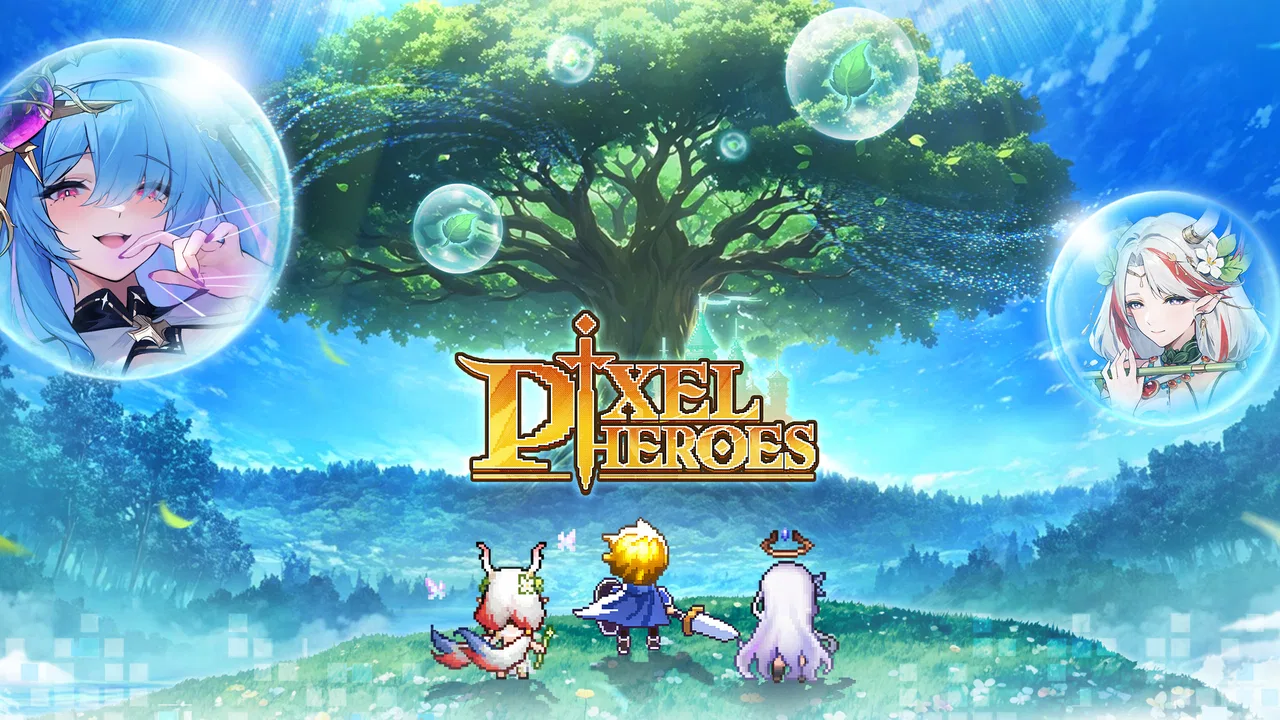
The pixel presentation gives the game a clear identity. It is not trying to compete with high-detail 3D role-playing games on visual spectacle. Instead, its appeal is tied to readable sprites, a lighter visual style, and the nostalgic feeling that comes from seeing a party of small heroes grow stronger over time. I personally like that the presentation does not demand the same attention as a cinematic action game. I can follow my team’s progress without needing to study every animation.
That convenience also explains the game’s main limitation. If you want every battle to be a tactical puzzle where your timing and manual control decide the outcome, this will probably feel too automated and progression-driven. The satisfaction comes more from preparing a capable roster than from personally directing every second of combat. I would recommend it to someone who enjoys planning a team and checking results, while I would point an action-oriented player toward a more hands-on RPG instead.
The store summary highlights a giveaway of three thousand six hundred and fifty summons. I see that as an important part of the initial invitation: new players are given a reason to engage with the recruitment side early rather than spending a long time with a tiny roster. Still, summons are only the beginning. The real question is whether the characters you obtain fit together, whether you can improve them efficiently, and whether you can resist treating every reward as a reason to spend immediately.
Building a team instead of chasing every character
One of the most useful habits I developed was to stop judging each new character in isolation. A character can look exciting and still be a poor short-term choice if investing in that unit leaves the rest of the team underdeveloped. I had better results when I considered what my current group actually needed: more durability, stronger damage, or a way to make the party’s overall performance more consistent.
This is a small but important distinction for a summon-based RPG. The temptation is to use every available pull as soon as it appears, then spread resources across too many heroes. I found that a narrower upgrade plan is easier to manage. I would rather have a dependable core group than a large collection of partially improved characters that all compete for the same materials.
That approach also makes the giveaway more useful. A large starting supply of summons can create excitement, but it can also create decision fatigue. My practical advice is to pause after the early recruitment burst, identify the team you are actually using, and save some flexibility for later choices. The strongest-looking result is not always the most helpful result for the account you are building.
Where the progression loop works well
The game is strongest when I want a low-pressure sense of progress. Even a short visit can feel worthwhile because there is usually something to review: a reward to collect, a hero to improve, or a stage result to assess. That makes it a good companion game. I can play it alongside a more demanding title without needing to memorize a complicated control scheme or reserve a long uninterrupted session.
I also appreciate the way this structure gives different kinds of players a place to settle. A casual player can focus on basic upgrades and regular rewards, while a more committed player can spend time comparing team choices and planning resources. The same account can support both styles, although the deeper benefits naturally go to people who are willing to check in consistently.
The trade-off is that progress can become repetitive. The loop is comfortable, but comfort and variety are not the same thing. After the novelty of recruitment fades, the enjoyment depends heavily on whether improving a roster is satisfying enough on its own. I would not install this expecting a constantly changing sequence of handcrafted adventures. I would install it because I like watching a party become more capable through repeated, manageable decisions.
What the latest version means for players
The move to version 2.1.6 shows that the game has continued beyond its release on March 13, 2024. That is useful context for anyone deciding whether to start now: this is not simply a launch build being left untouched. There has been room for the product to develop, and the current version is the one a new player will encounter.
I would still separate that fact from expectations about future content. A version number alone does not promise a particular feature, event, balance change, or long-term direction. What I can say is that the game’s present identity is already clear: it is a pixel-art, roster-building RPG built around repeated progression and summons. Anyone joining should choose it for that current experience rather than for imagined updates.
For existing players, a newer version can be reassuring because it suggests the game remains actively maintained enough to receive revisions. It can also create a practical concern: whenever a live RPG changes, familiar routines may need to be reconsidered. A character that once seemed like an obvious investment may become less attractive after future adjustments, while a previously overlooked unit may gain value. I recommend keeping some resources uncommitted instead of assuming that today’s perfect team will remain perfect forever.
For a new player, the current version reduces the worry of starting with an obviously outdated client. I would still take a measured approach during the first few sessions. Learn the basic reward cycle, see which characters you naturally enjoy using, and only then decide whether this deserves a permanent place on your phone. The free entry makes that trial relatively easy, but the time cost of maintaining another daily game is still real.
Spending, summons, and the pressure to keep up
The game is free to download, but its in-app purchases range from ninety-nine cents to one hundred twenty-nine dollars and ninety-nine cents per item. That wide range is something I would take seriously before starting. A player can enjoy the free structure, yet the presence of expensive purchase options means the game is designed to make spending available at several levels, including a very high one.
My advice is to decide on a personal boundary before the first exciting recruitment session. It is much easier to enjoy a free RPG when purchases remain optional choices rather than emergency solutions to a progression problem. The early giveaway can make the account feel generous, but it should not be treated as a reason to assume that every future reward will arrive at the same pace.
A useful everyday scenario is playing during a short break and using that visit only for routine maintenance. I might collect rewards, improve one priority hero, and stop before browsing every available offer. That simple habit keeps the game from turning a five-minute check-in into an unplanned shopping session. Players who dislike any form of monetized recruitment should skip this title, because the summon structure is central to its identity rather than a minor side activity.
On the other hand, players who are comfortable spending occasionally may appreciate having a free starting point and a range of optional purchase sizes. I would still avoid making a purchase just to repair an unfocused roster. Better planning often solves problems that spending merely hides for a short time.
Who will enjoy it, and who should look elsewhere
I think Pixel Heroes: Tales of Emond is a good fit for someone who likes pixel-art presentation, character collecting, gradual upgrades, and mobile sessions that do not require constant manual input. It is especially suitable for players who enjoy the feeling of maintaining an account over weeks rather than finishing a single story in a weekend.
It is also a reasonable choice for a player who wants a role-playing game that can sit beside other hobbies. I can imagine checking it after work, making a few roster decisions, and putting the phone away without needing to devote the whole night to it. That low commitment is one of its most practical strengths.
I would be more cautious recommending it to someone who wants a tightly authored narrative, complex exploration, or combat where personal reflexes are the main source of success. The pixel style may attract fans of classic RPGs, but the actual structure is closer to a long-term collection and progression game than to a traditional adventure with constant discovery.
It may also be a poor match for anyone who becomes frustrated by duplicate characters, slow resource accumulation, or the feeling that a larger roster creates more chores. A big cast is appealing only when managing that cast feels rewarding. If you prefer a small group of heroes with carefully designed, manual encounters, another role-playing game will likely provide a cleaner experience.
Small decisions that improve the experience
My first practical tip is to separate “new” from “useful.” A newly summoned hero is exciting, but that does not mean the character should immediately receive every available upgrade. I found it more efficient to keep a clear main group and test additions gradually. This protects resources and makes it easier to understand which changes actually improve the team.
Second, use the game’s short-session nature intentionally. Instead of opening it repeatedly whenever a notification or impulse appears, I would create one or two predictable check-in moments. That reduces the sense of obligation and makes the routine feel like a choice. It also helps reveal whether I genuinely enjoy the game or am simply responding to reminders.
Third, do not let the initial summon giveaway dictate the entire account. Early luck can be fun, but building around one fortunate result may leave the rest of the roster neglected. I prefer to use the opening period to learn the game’s priorities, then make longer-term decisions once I understand which heroes I actually rely on.
Finally, keep an eye on version changes without assuming that every update requires a complete rebuild. The current 2.1.6 release is a useful snapshot, but live RPGs evolve. I would watch for changes that affect the value of existing investments, new reasons to use less popular characters, and adjustments that alter how quickly a casual player can progress. That is more helpful than chasing every rumor or rebuilding after every small change.
The gaps I would want addressed
The biggest gap for me is the risk of repetition. A progression loop can remain enjoyable for a long time when the roster gives it enough variety, but it needs meaningful decisions to avoid becoming a checklist. The game’s long-term appeal therefore depends on how well its character choices continue to matter after the opening excitement.
I also think the balance between free play and spending deserves close attention from any newcomer. The free entry and generous initial summons make the first impression welcoming, yet the high end of the purchase range reminds me that the game is built to support serious spending. A comfortable experience requires self-control as much as it requires team planning.
Another limitation is that accessibility can reduce intensity. The same convenience that makes the game easy to fit into a busy day may leave a dedicated player wanting more direct control. I would not call that a flaw for its intended style, but it is a genuine mismatch for players who measure RPG quality through tactical input rather than account progression.
The Teen rating is also worth considering for households. Parents should treat it as a game for older children and teenagers rather than assuming that pixel graphics make it automatically suitable for everyone. The recruitment and purchase structure is a better reason to discuss play habits than the visual style alone.
My recommendation after living with the game
After spending time with it, I see Pixel Heroes: Tales of Emond as a pleasant, focused mobile RPG rather than an all-purpose role-playing experience. Its strongest qualities are the approachable pixel look, the steady roster-building loop, and the ability to make a little progress in a short visit. The free price makes trying it straightforward, and the current version gives new players a sensible point of entry.
My recommendation comes with a clear condition: enjoy it as a gradual collection game. If you approach it expecting a fully manual adventure, a constantly surprising story, or a progression system untouched by monetization, you may become frustrated quickly. If you like planning a team, checking in regularly, and seeing an account improve over time, its structure makes much more sense.
For me, the best way to play is patiently. Use the early summons to establish direction, invest in a practical core rather than every new arrival, and set a spending limit before the game presents tempting offers. Watch how version changes affect the roster, but do not let every update erase your own preferences. The right reason to keep playing is satisfying team growth, not the fear of falling behind.
That is why I would recommend it to a friend who wants a relaxed, pixel-styled RPG for a phone and already enjoys character collection. I would not recommend it to a friend seeking a story-heavy or action-first adventure. With that expectation set correctly, HaoPlay Limited’s game is easy to sample, simple to fit into everyday life, and capable of becoming a dependable small-session hobby without pretending to be something it is not.
FAQs for Pixel Heroes: Tales of Emond
01What is Pixel Heroes: Tales of Emond?
Pixel Heroes: Tales of Emond is a pixel-art role-playing game with collectible heroes, turn-based battles, and an idle progression system. You assemble a team of characters, improve their equipment and abilities, and send them into different adventures across the game world. Its retro-inspired visuals and automated combat make it suitable for players who enjoy RPG progression without needing to control every action manually.
02Is Pixel Heroes: Tales of Emond free to play?
Yes, Pixel Heroes: Tales of Emond can generally be downloaded and played for free, although it includes optional in-app purchases. These purchases may provide premium currency, summon opportunities, resources, or progression bundles. The game also uses reward systems and timed activities to encourage regular play, so users who prefer a completely purchase-free experience should expect slower progress and should review the available payment options before downloading.
03Does the game require an internet connection?
An internet connection is normally required for most important features in Pixel Heroes: Tales of Emond. Online access is used for account synchronization, events, rewards, battle modes, purchases, and communication with the game servers. While some menus or previously loaded content may remain accessible briefly without a connection, the game is designed primarily for online play, so it may not be suitable for players looking for a fully offline RPG.
04Is Pixel Heroes: Tales of Emond suitable for beginners?
The game is relatively approachable for newcomers because battles are easy to understand and many actions can be automated. However, beginners still need to learn how to build a balanced team, manage resources, upgrade the most useful heroes, and choose suitable formations for different opponents. The large number of characters, currencies, missions, and progression systems can feel overwhelming at first, but the guided early stages help explain the main mechanics.
05What devices can run Pixel Heroes: Tales of Emond?
Pixel Heroes: Tales of Emond is intended for modern Android and iOS devices, but the exact compatibility depends on the operating system version and the hardware requirements listed on the relevant app store. Because the game includes animated battles, online features, and several visual effects, older phones may experience longer loading times or reduced performance. Before downloading, check the store listing and make sure sufficient storage space is available.
Pros
- Colorful pixel-art visuals with charming character designs.
- Quick battles make it easy to play during short breaks.
- Large roster offers plenty of heroes to collect and upgrade.
- Idle rewards provide progress even when you are not actively playing.
- Frequent events add variety beyond the main campaign.
Cons
- Progress can feel slow without regular resource management.
- Duplicate heroes may be frustrating when building a specific team.
- Many menus and systems can feel overwhelming for new players.
- Some rewards and features are tied to watching ads or spending currency.
- The outcome of battles can depend heavily on team composition and upgrades.

Pixel Heroes: Tales of Emond
Gallery